

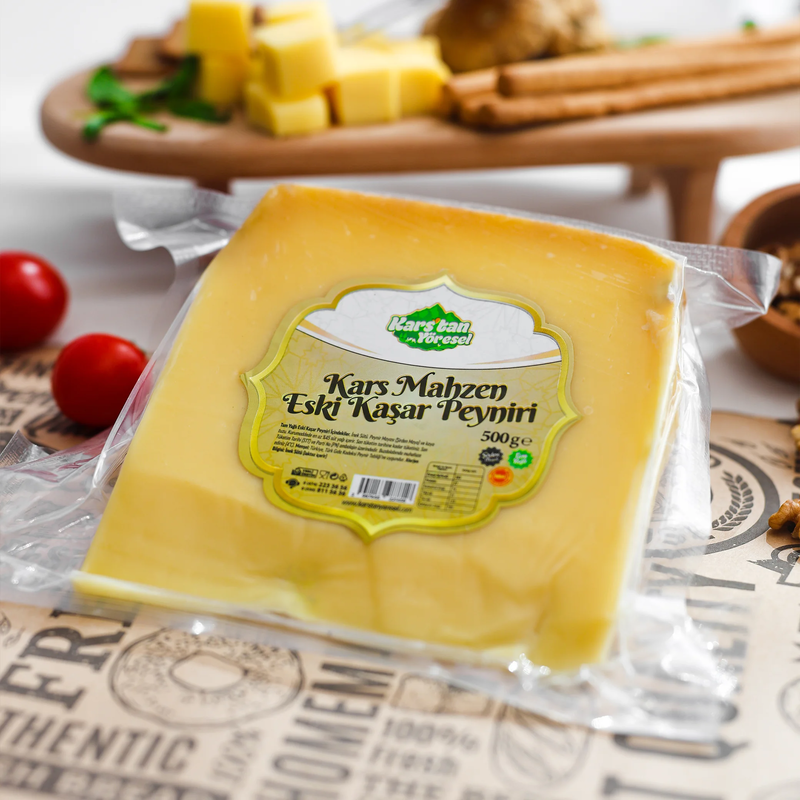
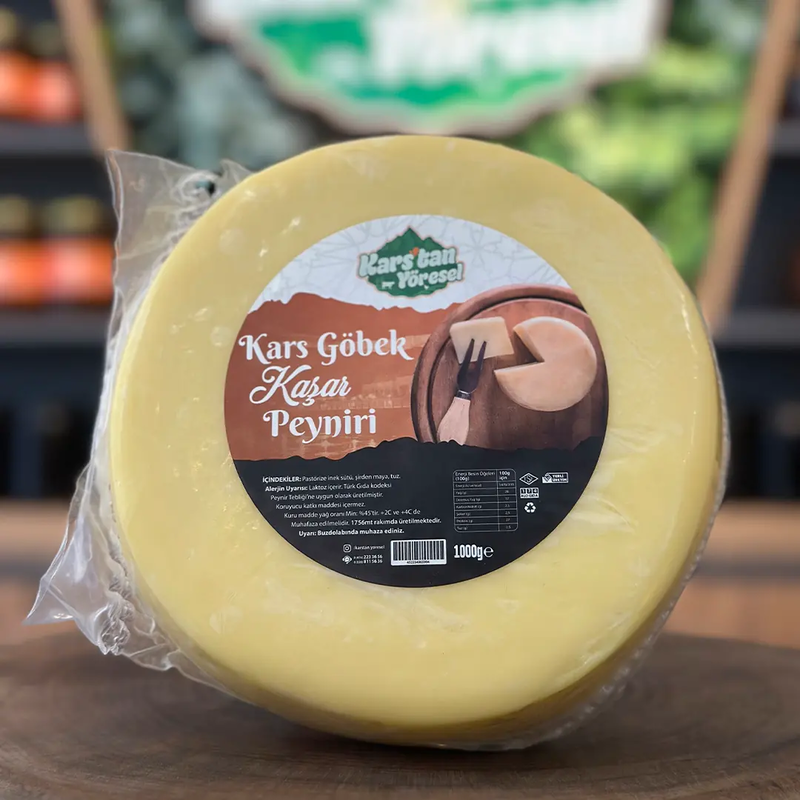
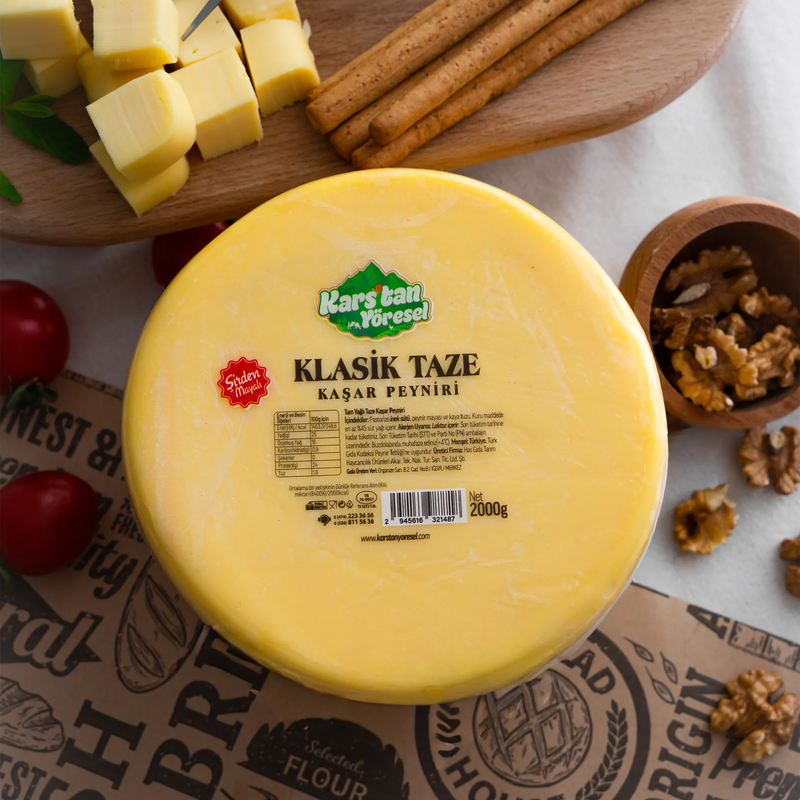
🥛 Nutritional Values (per 100 g)
| 📊 Nutrient | 🧮 Amount (100 g) |
|---|---|
| 🔋 Energy | 356 kcal / 1,476 kJ |
| 💪 Protein | 25 g |
| 🧈 Total Fat | 28 g |
| 🍳 Saturated Fat | 18 g |
| 🥖 Carbohydrate | 2 g |
| 🦴 Calcium | 700 mg |
| 🧂 Sodium | 600 mg |
🏔️ History and Story of Kars Kashar Cheese
Kars kashar is a type of cheese renowned for its distinctive aroma and durability, produced on the high-altitude plateaus of Kars and its surroundings in Turkey's Eastern Anatolia Region. Its history dates back to the late 19th century, when Kars was under Russian administration.
📜 History
During the period of Russian occupation of Kars between 1878 and 1918, the Molokans and other Caucasian immigrants who settled in the region brought with them a rich cheese-making culture. During this era, cooperatives and modern cheese production techniques flourished on the Kars plateaus. Thanks to its long shelf life during winter months and its nutritious qualities, kashar cheese became a staple food for the local population.
🌿 Production Characteristics
- 🗻 Highland Milk: Produced from the milk of native cow breeds grazing on natural pastures on Kars' plateaus exceeding 2,000 meters.
- ⚒️ Traditional Method: The milk is fermented in copper cauldrons at a specific temperature and kneaded using the scalding technique.
- ⏳ Maturation: Depending on quality, it is aged in a natural environment for 3 to 12 months; this process gives the cheese its unique aroma.
- 🛡️ Naturalness: Contains no additives; produced entirely under natural and hygienic conditions.
✨ Why Kars Kashar?
With its high protein and calcium content, slightly salty and nutty aroma, and its distinctive elastic texture when sliced, Kars kashar is indispensable for breakfast tables, toasts and pasta dishes. Genuine Kars kashar is, in the bitter cold climate of the region, truly a taste miracle bestowed by nature.
😋 Bring this unique flavor to your table; you will feel the difference of traditional production and natural highland milk with the very first slice!
